The marriage of matter and mind
A potter leans over the wheel. The body suddenly stiffens, the wheel starts spinning, the hands move fast. In a matter of moments, the wet lump of clay is centered (Photo 1). It stays there, rotating within the wet hands of the potter to the rhythm of the electrical buzzing of the wheel. The dance of clay and flesh, the marriage of matter and mind, has begun.
Looking at the vessel-yet-to-be-shaped on the wheel, I wonder not where memory comes from, but where it might lead us today. As the joint exploration of archaeology, anthropology, and cognitive science has taught me, memory is not a movement reaching down into the past but a movement probing toward infinite unrealized, or perhaps unrealizable, potential futures.
In scholarly literature and public imagination alike, pottery-making has long been approached as a craft of the past. Pots are seen as residues of what has already been done, their shapes crystallizing histories, traditions, and identities. Yet, as the lump of clay spins on the wheel, it is not the past I witness but an open horizon of potential shapes, technical gestures, and artisanal choices, most of which will never be realized. By attending to the making context, pottery emerges as a craft of the future and memory as the ongoing crafting of what has yet to be. Every social, cultural, and material engagement is future oriented.
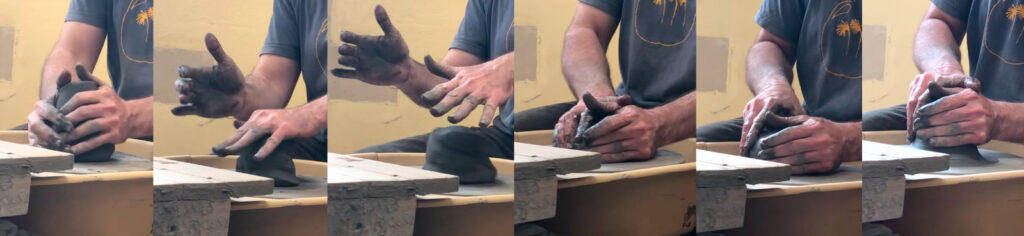
Operational sequence of actions enacted by a potter of Margarites (Crete), to center the clay. Photo by Emanuele Prezioso.
Thrown into the world
“Have you ever been to Margarites before?” the potter asks me while collecting some clay from a white bucket. “Yes,” I mutter, caught off guard, my eyes fixed on the slow choreography of hands and clay. Years of observations have not dampened the feeling of confusion that comes when my attention is drawn away from the hypnotic dance of memory. I do not ask questions during the making process. Observing the weaving of pasts and futures in the embodied interaction with and through clay discloses the ecological, enactive, and multitemporal nature of memory and remembering (Prezioso and Alessandroni 2023). Once the process is over, artisans can actively participate, reflect, and talk about their craft, bringing their subjective dimension to the fore.
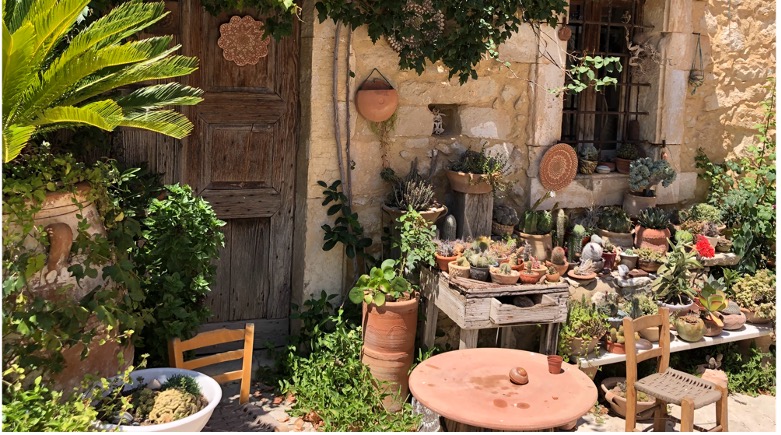
The outside space of a pottery workshop in the village of Margarites used during late spring and summer. Photo by Emanuele Prezioso.
It is not that actions matter more than words but the fact that my presence, as that of the tourists who flock to the workshop during the holidays (White and Adu-Ampong 2024), is already affecting the crafting process. My presence modifies the environment: it drags me into the same ecology of gestures, tools, sociocultural, and material dynamics that I seek to observe and describe. The workshop is not simply a physical context but a sociomaterial milieu where bodies, older creations, other people, plants, raw materials, infrastructures, social practices, and cultural customs, each possessing their own histories, continuously shape one another (Coupaye 2021) (Photo 2). Studying “cognition in the wild” means accepting that our modes of thinking, doing, and feeling are never detached from the milieus that make them possible (Hutchins 1995).
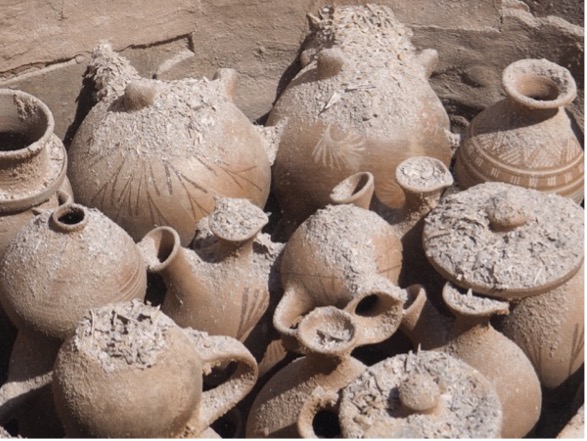
Newly fired vessels exposed after the opening of a kiln in Margarites showing the daisy decorative motif, their surfaces still bearing traces of ash and heat. Photo by Emanuele Prezioso.
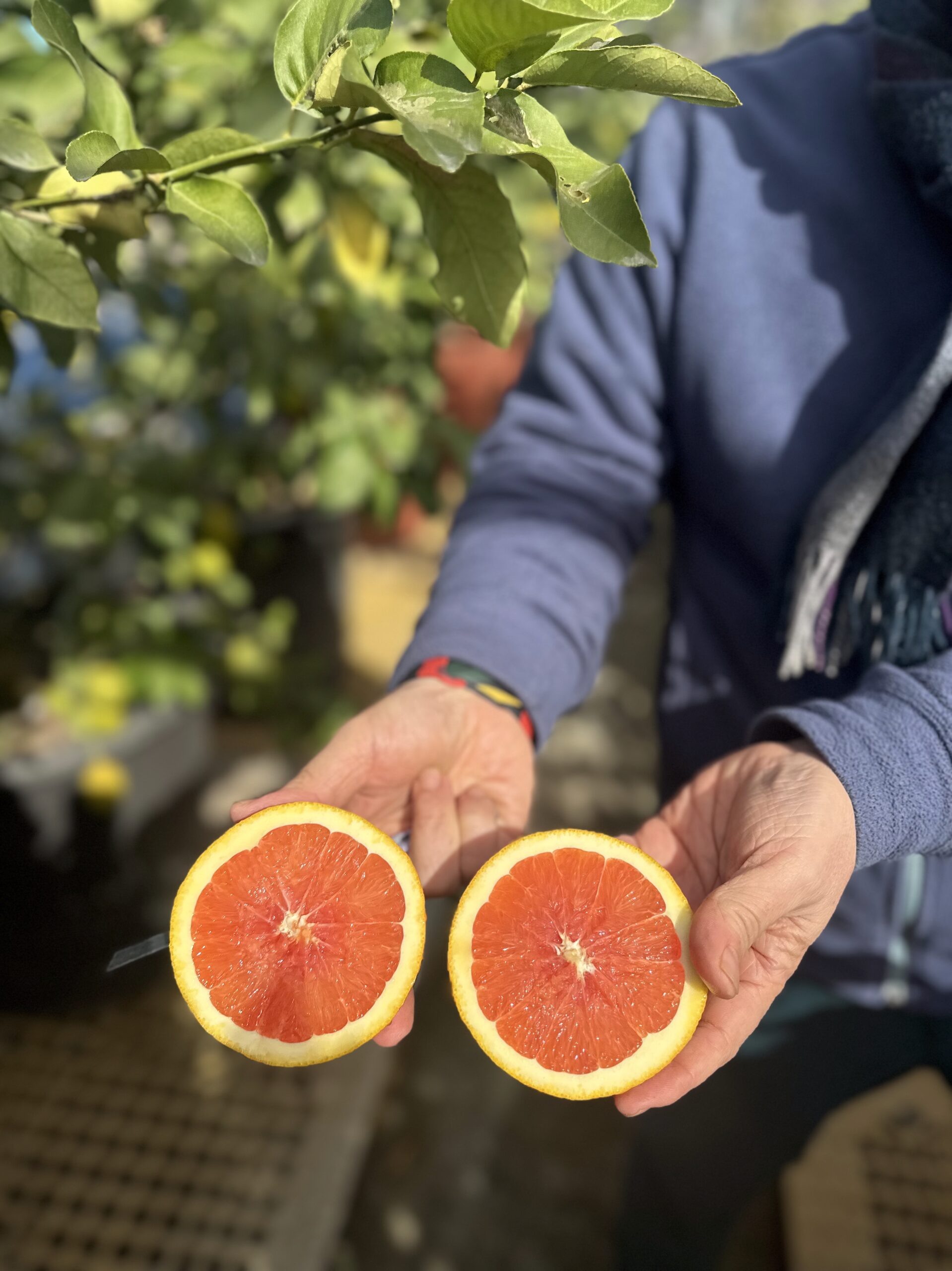
“Margarites,” he says, gesturing with his head toward one of the many pots decorated with little daisies (Photo 3), the English translation of μαργαρίτες, “has always been a pottery village, since the Venetians and the Ottomans.” He speaks of when he left the village to study pottery-making in Italy, how the village used to be before he built his workshop, the Cretan past that inspires his style, the old kilns built by his father that still catch the wind. He describes the natural forest that grows in the gorge, where he gathers wood and clays to craft his vessels (Photo 4). With all the scholars who visit and collaborate with him, the potter is used to these chats. I listen and nod.
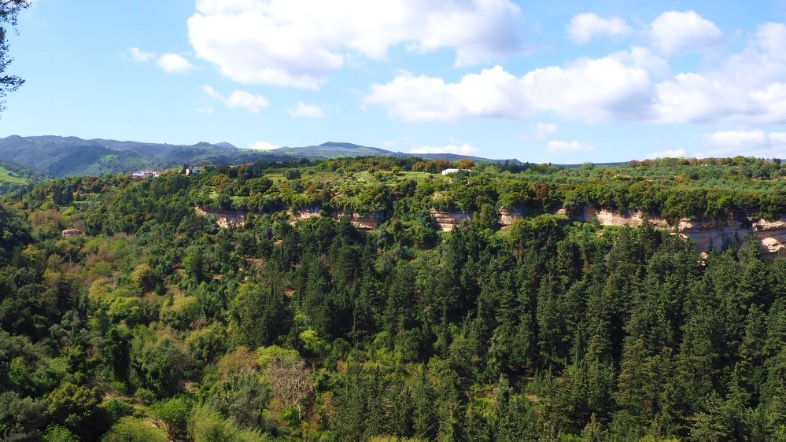
The gorge that cuts through the pottery village of Margarites, located in the heart of the Psiloritis Natural or Nature Park (Φυσικό Πάρκο Ψηλορείτη), a UNESCO Global geopark located in the central part of the island of Crete. Photo by Emanuele Prezioso.
Crafting possibilities
It is with a sudden electric sound that the potter goes back to work the clay. His hands move with a rhythm that is neither mechanical nor wholly conscious. The vessel-yet-to-be-shaped spins gently while the body adjusts to the pressure of the clay. It is in this dance that memories emerge, anticipating the potential shape that the vessel will take (Photo 5). Memory is neither fully in the potter’s biologically inherited body nor in the culturally learned technical gestures that the clay requires to be shaped. It goes back and forth, from the almost imperceptible movement of an eye or the twitch of a muscle, before swiftly moving in the rising and lowering of the clay. Each action draws on gestures long sedimented in the pottery tradition and on skills acquired through years of practice made visible in the previously crafted pots that constellate the workshop. In this sense, the potter is not remembering but re-enacting. In contrast to remembering, re-enacting is not the passive recollection of stored information but the emerging product of our embodied transactions with material culture and people (Prezioso 2024). Through each gesture, accumulated histories of acting and thinking are taken up, adapted, and updated, weaving together temporal threads, orienting the making process toward a future that draws nearer with every spin of the clay (Prezioso and Parisi 2025).
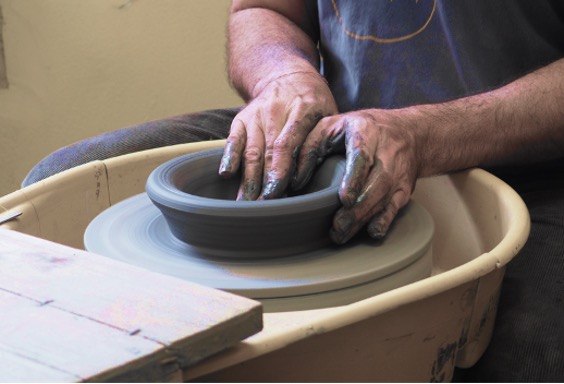
The potter of Margarites, G.D., throwing a vessel on the rotatory wheel. Photo by Emanuele Prezioso.
Like the life history the potter has just told me, the clay gradually takes shape. Each gesture is mediated by experience: the skills and knowledge developed through countless vessels thrown in other times and places, the feelings left by the ancient pots observed in museums. Yet, none of these operate as a return to the past but are directed toward future possibilities made alive in the movements that the potter enacts through the clay (Malafouris 2014). The craft is organized by the memory of what is to come, for memory, here, is not about bringing back what has been but bringing forth what could be.
I propose that memory, in such acts, is not a recollection of what has been but the crafting of the possible: the unrealized, or perhaps unrealizable, potential futures. Memory is a process in a constant state of flux. It is never the same and always oriented toward futurity; it is a faculty re-enacted with gestures through materials within specific sociomaterial milieus. This crafting of the possible situates memory as a living process rather than a static storage of something past to be recalled as passive information.
Memory and futurity
The implications of these perspectives on memory reach beyond the potter’s wheel. What the potter of Margarites showed us is not the crafting of a vessel but the crafting of the possible: the temporary shape that the clay gives to the continual unfolding of potentially realizable futures. Re-enacting temporarily holds together the unfolding potential that takes shape within our social, cultural, and material milieus. This recurs in every sphere of life.
In a time marked by sociocultural disruptions, ecological uncertainty, and technological acceleration, considering memory as oriented toward future potentialities can produce critical insights into understanding the promises of the past and the failures of the present.
Climate change makes this future orientation impossible to ignore, extending the generational dynamics already visible in pottery-making to the longer-than-human dynamics of human-environmental relations. As in the workshop, the practices we inherit are not a fixed recipe to be recalled but potential modes of thinking, doing, and feeling re-enacted toward the sociomaterial conditions in which we are immersed. Just as gestures and thoughts sediment through craft traditions, so human-environment relations sediment through the thick history of human actions and thoughts that (pre)historical records trace across centuries. The rising temperatures, shifting seasons, and eroding coastlines are not simply environmental phenomena; they are expressions of how generations of people have acted, imagined, or forgotten their place within the world (van der Leeuw 2020).
This dynamic is visible wherever communities living with a changing environment bring forth from the landscapes they know the potential for what comes next. For centuries, communities in central Nicaragua’s Mayales River Valley have lived with a river that can suddenly change course and flood. Over the pre-Hispanic past, they met such changes by relocating their settlements within the valley and continually adjusting how they lived with the river (Torreggiani, Harvey, and Geurds 2023). Seen from the perspective of memory presented here, this was not simply endurance. The past is not something static waiting to be changed. Rather, previous modes of acting, thinking, and feeling are taken up and reshaped in a continual dance between the river, its ecology, its materials, and the social relations that gather around it. Just as the potter never throws a vessel in the same way, each form worked out in response to what the clay and the wheel are doing, these communities never meet the same river twice, each season worked out in response to what the water is doing. Engaging with the river is a way of remembering forward: past engagements with its sociomaterial milieu turn into the means to anticipate the floods and droughts to come and to bring forth what the river might yet do. What they sustain is therefore more than resilience: it is the crafting of the possible carried out in daily exchanges with the river.
The climate crisis is less the outcome of nature’s instability than our own: a movement of memory that has separated human histories from the milieus that sustain them. The social and the material are never apart. The infrastructures we build, the resources we consume, and the daily gestures we repeat are not only shaping the conditions of our shared futures but laying down the sociomaterial milieu through which coming generations will remember forward. The present is layered with the potentials of what has been and what may yet come. What we do today is crafting of the possible: the inherited ground from which those who follow will bring forth their own ways of acting, thinking, and feeling. The climate crisis discloses the need to think about memory as a means to remember forward within the sociomaterial milieus we inhabit.
Memory in these contexts is a careful dance between what the past has left us and the actions that we can take in the present to shape potential futures. As with our vessel in the making, it enables us to shift from thinking the world as fait accompli to being central in that ongoing process that I have called memory.
The unfinished vessel
Thinking of memory as a forward-looking process reminds us that the future is already taking shape in the gestures, materials, and relations through which we live. Like the vessel on the wheel, memory is never finished: it is shaped by the interplay of histories and possibilities that come together every time we act, think, and feel in, with, and through what populates our milieus. To remember, then, is not about bringing something back but about remaining attuned to a continually changing world. As the clay that spins before the potter’s hands holds the trace of countless past gestures and potential future ones, so too our sociomaterial engagements are the sites where unrealized futures take form. Memory, as the crafting of the possible, is where matter and mind continue to meet.
References
Coupaye, Ludovic. 2021. “The Living Shape of Time: Time and Technics in the Case of Abulës-Speakers’ Yams.” In Time and Its Object, edited by Susanne Küchler and Paolo Fortis. Routledge.
Hutchins, Edwin. 1995. Cognition in the Wild. The MIT Press.
Malafouris, Lambros. 2014. “Creative Thinging: The Feeling of and for Clay.” Pragmatics & Cognition 22 (1): 140–58.
Prezioso, Emanuele. 2024. “The Knossian Kamares Style as Transgenerational Memory.” Journal of Archaeological Method and Theory 31: 1430–61.
Prezioso, Emanuele, and Nicolás Alessandroni. 2023. “Enacting Memories Through and With Things: Remembering as Material Engagement.” Memory Studies 16 (4): 962–83.
Torreggiani, Irene, William J. Harvey, and Alexander Geurds. 2023. “Along the River Flow: Human Resilience in Fluvial Environments in Pre-Hispanic Central Nicaragua.” In Underwater and Coastal Archaeology in Latin America, edited by Dolores Elkin and Christophe Delaere. University Press of Florida.
van der Leeuw, Sander. 2020. Social Sustainability, Past and Future: Undoing Unintended Consequences for the Earth’s Survival. Cambridge University Press.
White, Eleanor, and Emmanuel Akwasi Adu-Ampong. 2024. “In the Potter’s Hand: Tourism and the Everyday Practices of Authentic Intangible Cultural Heritage in a Pottery Village.” Journal of Heritage Tourism 19 (6): 781–800.
Acknowledgments
I am grateful to the British School at Athens for awarding me the bursary and introducing me to Margarites and to the potters of this village, particularly G.D. who showed me the potential of memory.
Emanuele Prezioso (Oxon) is currently a researcher affiliated to the Centre for the Anthropology of Technics and Technodiversity (University College London) and the Center for Cognition, Language, Action, and Sensibility (Ca’ Foscari University of Venice).
Cite as: Prezioso, Emanuele. 2026. “Memory and The Crafting of the Possible.” In “Promised Futures,” edited by Ibrahim Ince and Erick Moreno Superlano, American Ethnologist website, 9 July. [https://americanethnologist.org/online-content/collections/promised-futures/memory-and-the-crafting-of-the-possible-by-emanuele-prezioso/]
This piece was edited by American Ethnological Society Digital Content Editor Kathryn E. Goldfarb ([email protected]).