This piece is part of the “Anthropology that Breaks Your Heart” series, a project inspired by the work of Ruth Behar’s The Vulnerable Observer (1996).
I came to my research by accident—at once a coincidence I could not ignore, a falsehood I wished to believe, and a truth my life had been preparing me to meet.
let that joy be m(in)e
“Girl joy (Kız neşesi) is something only girls have. You will not allow anyone to kill it. Not your son, not your husband, not your father, not your boyfriend. It belongs only to girls in the world, and that girl joy provides the world with fire, energy, and substance.” – Buket Uzuner (2020, 00-00:30)
Whenever I watch feminist author Buket Uzuner’s YouTube interview, in which she speaks about girl joy, I get emotional. The meaning intensifies in TikToks, where Uzuner’s words circulate as soundtracks for short videos of girls and girlhood. In these clips, often unfolding in spaces where men are absent, girls cry, dance, drive, cook, put on makeup, pose with their mothers and grandmothers, laugh in restrooms, try on clothes in fitting rooms, get lost in overthinking, burn with anger, or simply walk to school. You are every woman. These seconds capture a desire-centered girl joy in daily life by embodying Uzuner’s words, breaking away from “conditioned habits, reactions, and emotions” (Montgomery and bergman 2017, 46).
Girl joy is an act of resistance that refuses subordination. I don’t know if I want to blend into girl joy or become the girl joy that surrounds me. All I know is that girl joy makes me a fragile, yet ruthless, queer ethnographer.
When I was little, Anneannem took me to gatherings where women drank Turkish coffee, read fortunes, and sometimes sang while I performed as a belly dancer.
In high school, I met people on cruising apps to write little
sex stories. I told them my age was older. Sometimes, they wanted
to pay me, and I didn’t say no. I put on a wig and filmed Sia’s
Chandelier music video. I never stopped myself from going through
their family photo albums while they were in the bathroom. I fell in
love with some of them, but didn’t say it. Some of them
touched me without my consent, and I kept quiet.
Some ethnographies simply carry on and quietly fold themselves into life. The images
and lives we try to see, listen to, and feel offer us something other than what we were
“expecting.” But what if ethnographies allow us to recognize the very thing around
which we have built our lives?
Girl joy is an affect that has already permeated my entire perspective, determining
how I position myself as a researcher in life and in my research.
I am just a girl. For me, girl joy was never fully inhabitable but always mediated: an affect I could trace, desire, and be undone by, rather than a state I could claim as mine. It isn’t just at the back of my mind—it’s right beside me and in front of me as well. When I wanted queer girl joy, I wanted to be that joy, to embody it. Until I crossed a line and ghosts emerged.
Some “thing” urges a message to be sent.
Years later, there is a meeting in a café. You are late. They are not angry. When you ask why they reached out after all this time, they look away. They cannot answer.
You laugh, as if to loosen the tension. They say they missed it.
You tell them how a male colleague said your laughter was strange. How much it hurt.
They say they can bear witness to this moment,
the moment when girl joy is interrupted.
You do not answer.
They are not there, yet they appear to be.
Hauntology examines how unresolved “things” persist in ways that are often unseen in our everyday lives (Gordon 2008). I am dying to be a girl. Therefore, I entangle feminist ethnography with hauntology to describe those moments when “home becomes unfamiliar” (ibid., xvi).
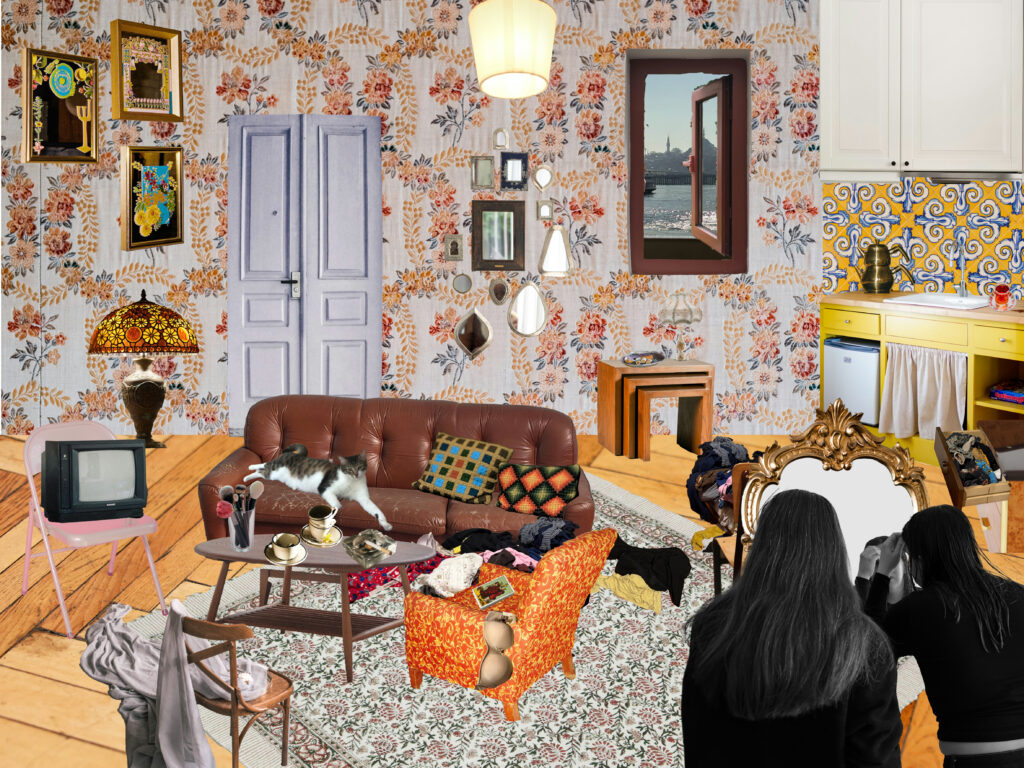
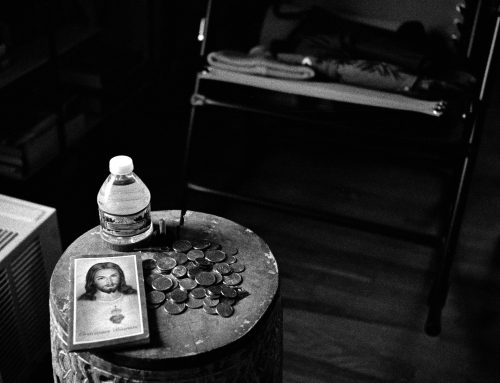
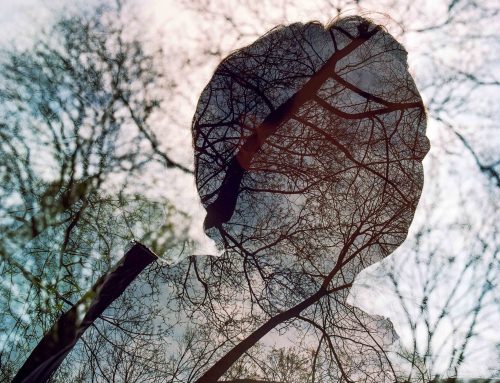
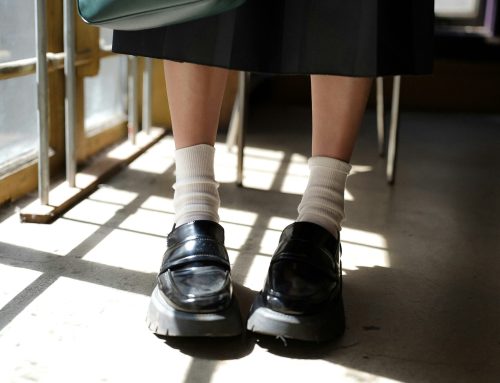
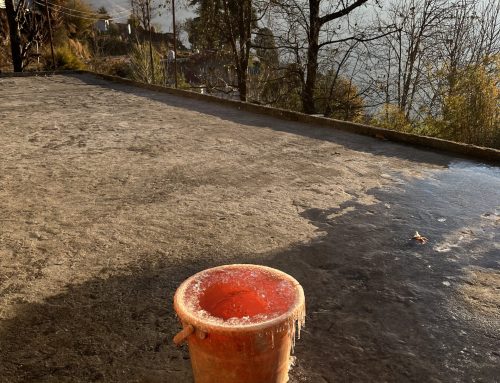
in another messy universe. Photos by deniz atakan gürbüz, collage by Mehmet Uysal.
We are smoking in the (messy) kitchen.
Snap!
You can’t see the counter beneath the dishes.
Snap!
In a tarot spread where half the deck is missing, they insist on reading only hopeful intuitions, contrary to what I see.
Snap!
While singing along to the song, you ask how my research with trans women and Armenians is going.
Snap!
I’m not even sure you’re listening to what I’m saying.
A girl joy that refuses to believe in being gaslit wants to remember how happy it was, will be.
Snap!
Everything is because of men.
Snap!
You struggle to flick the ash into the ashtray.
777, manifestation, inshallah.
Rituals where words are spells fall into place.
Snap!
You turn on the camera. You start filming a TikTok.
Snap!
I don’t know what I’m supposed to do.
Snap!
I start crying.
Against a world that is disappearing, the future is rewritten by girl joy.
Snap!
Smile, you say. Men like positive girls.
Snap!
You unhook your bra and toss it aside.
Snap!
The smell of acetone from the nail polish you just wiped off is still in my nose.
Every new yesterday, today, and tomorrow.
Drag!
Oh well, there is life after all, you say.
You change the song.
Despite me(n)
Queer hauntography: a fluid mode of writing and doing
ethnography that traces how ghosts disrupt the boundaries of field
and non-field, collapsing personal and collective lifetimes into each
other. I am gonna live like tomorrow doesn’t exist. It is a method
haunted by what it observes, where the ethnographer is never fully
in control. This morning, I woke up from a menstrual dream. I felt
perfect.
Hauntings sometimes arrive as moments of girl joy, offering insight into the love, melancholy, events, connections, and conditions that shape my understanding of life and research. However, this abundance of ghostly emotions also carries the risk of turning the researcher into a “vulnerable observer” (Behar 2022), creating a trap of delusion with ghosts.
Ghosts appear as more than metaphors or nostalgia; they intrude in the present through sudden memories, sensory disruptions, or uncanny repetitions that collapse the line between field and non-field. Do not carry pain that is not yours. I call this uncanny disembodiment the “thing”: the stubborn persistence of ghosts that, in one way or another, stalk subjects and researchers alike across worlds.
#SOME FIELD NOTES ARE TOO WRONG TO BE SHARED#
There’s some “thing” about being somewhere you shouldn’t be. Or there’s some “thing” that comes when you run to the bathroom at a moment of haunting and fake a pee break to write everything down. There’s some “thing” that follows you as you post a story on Instagram of you taking a snapshot of the crowd as you walk with your sunglasses during a Women’s Day march, just to show that you care. There is some “thing” about crying in a brothel and having cigarette smoke blown in your face. There is some “thing” that lurks inside you when you deliberately take the subway in the opposite direction. There is a “thing” about wishing you were on the missing plane that departed from Malaysia.
#SOME FIELD NOTES ARE TOO
#REAL TO BE ERASED
Estrofem 2 mg. And the researcher’s personal life and the haunting blur into the “thing” itself. The ghosts refract not only the damage done to my own attachments but also to the fragile relations of care and interests that circulate in the field. It is a fact (the only one I am sure of) that ghosts and girl joy create a mess (Manalansan 2014). Mess, read queerly, is “not limited to bodies, objects, and desires, but is also about processes, behaviors, and states of affairs,” as girl joy refuses to conform to socially sanctioned ways of interfering with normative spaces (Manalansan 2014, 97). Killing is not enough.
The messiness of queer hauntography often resists grounding (like girl joy). A queer hauntography does not stabilize into a method but folds back into itself, becoming autoethnography, then returning again as queer hauntography, and so on in a cycle. In this “open mesh of possibilities” (Sedgwick 1993, 8), queer hauntography moves through both pain and desire.
Pain and desire share a queer similarity: they are intimate, fluid, constructive, destructive, possible, impossible. Some “thing” takes you over. Some “thing” is missing from ourselves. Here, the queer ethnographer ends up telling their own story while trying to tell others’, yet the purpose is never the same.
While eavesdropping on the gossip of the
high school girls sitting in front of us on the
ferry, I bend down to tie my shoe and surprise
you with an unexpected question.
Pain: Do you think I have girl joy?
Desire: Of course you do, my love.
Pain: You’re not lying to me so I won’t feel bad, right?
Desire: No, no, I really think you have excessive girl joy.
Pain: How so?
Desire: I can’t explain it, but there’s some “thing” I see in you when we’re together.
understanding is more important than remembering
Queer hauntography does not simply extend feminist reflexivity but begins with ghosts themselves as constitutive presences inherent to queer hauntography; it contains them. They persist as the desire to go on, and as the invisibility of pain that haunting leaves behind.
JOURNEY TO THE END OF THE CITY: a hüzün that is unprovoked and spontaneous
Belonging is inside me, with me.
Walking away is moving to innocence.
I found you walking away. Your upstairs neighbor called the cops when you were fighting with a client you couldn’t get your money from. You called me. I ran. We ran to the end of the city. You left me little notes. Some I imagined. Some you imagined. Some are our dreams. But readers will never know which.
We leak into each other’s lives. I know you’re angry with me now, but I’ll be back. I belong to you, not the city, empire, or anywhere else. I’ll be back, saddened by the excitement of girl joy’s possibilities. And that’s somewhere else.
there is no end (to harm)
Not just feelings, but bodies matter. Sometimes, knowing is enough as witnessing is already impossible. Knowing and knowledge are not the same “thing.” Knowing that understanding can be the outcome, without the need to fix it in ethnography, memory, or inscription, is sometimes more valuable than treating knowledge as some “thing” that must always be produced. Yet, what remains most difficult to write is not knowledge, but the fragile experience of understanding or animating it in our messy world.
this “thing” is written for
unsettling boundaries and boundaries that are yet to come
girl (they)
joy (them)
revealed itself as both absence and presence:
in words that denied me closeness (beauty and the dogs)
in laughter that refused meaning (regarding the pain of others)
in the silences of interview recordings where music cut across testimony (girl, so confusing)
Girl joy unsettles, surrounds, and acts upon me. To write queer hauntography, then, is to let girl joy do its work: to bind me to life and to remain stubbornly its own.
I am your future queer hauntography.
Wherever you’re writing from, that’s where I’m writing from. I want to say more beautiful things, but all I can think of is destruction. I believe that every story exists to be told, which is the world’s most false truth. Knowledge producers are not the ones speaking at that time. It’s me. Queer hauntography will hurt you. But you’re enjoying it.
References
Behar, Ruth. 2022. The Vulnerable Observer: Anthropology That Breaks Your Heart. Beacon Press.
Blakely, Kristin. 2007. “Reflections on the Role of Emotion in Feminist Research.” International Journal of Qualitative Methods 6 (2): 59-68.
Buket Uzuner: “Sadece Kızlarda Olan Bir Şeydir Kız Neşesi ve Coşkusu. Hiçbir Şekilde. 2020. YouTube. https://youtu.be/uBd8TyoOj9g?si=wSkptqKs265tt018.
Dorion, Léa. 2021. “How Can I Turn My Feminist Ethnographic Engagement into Words? A Perspective on Knowledge Production Inspired by Audre Lorde.” Gender, Work & Organization 28 (2): 456–70.
Gordon, Avery. 2008. Ghostly Matters: Haunting and the Sociological Imagination. University of Minnesota Press.
Manalansan, Martin F. 2014. “The ‘Stuff’ of Archives.” Radical History Review 2014 (120): 94–107.
Montgomery, Nick, and carla bergman. 2017. Joyful Militancy: Building Thriving Resistance in Toxic Times. Anarchist Interventions Series 07. AK Press.
Sedgwick, Eve Kosofsky. 1993. Tendencies. Series Q. Duke University Press.
deniz atakan gürbüz (they/them) is an interdisciplinary storyteller.
Cite as: gürbüz, deniz atakan. 2026. “queer hauntography of girl joy and all the messy places.” In “Anthropology that Breaks your Heart: The Risk of Proximity,” edited by Alexandra Dantzer, Uyen Dang, and Emma Kahn. American Ethnologist website, 27 March. [https://americanethnologist.org/online-content/collections/anthropology-that-breaks-your-heart-the-risk-of-proximity/queer-hauntography-of-girl-joy-and-all-the-messy-places-by-deniz-atakan-gurbuz/]