This piece is part of the “Anthropology that Breaks Your Heart” series, a project inspired by the work of Ruth Behar’s The Vulnerable Observer (1996).
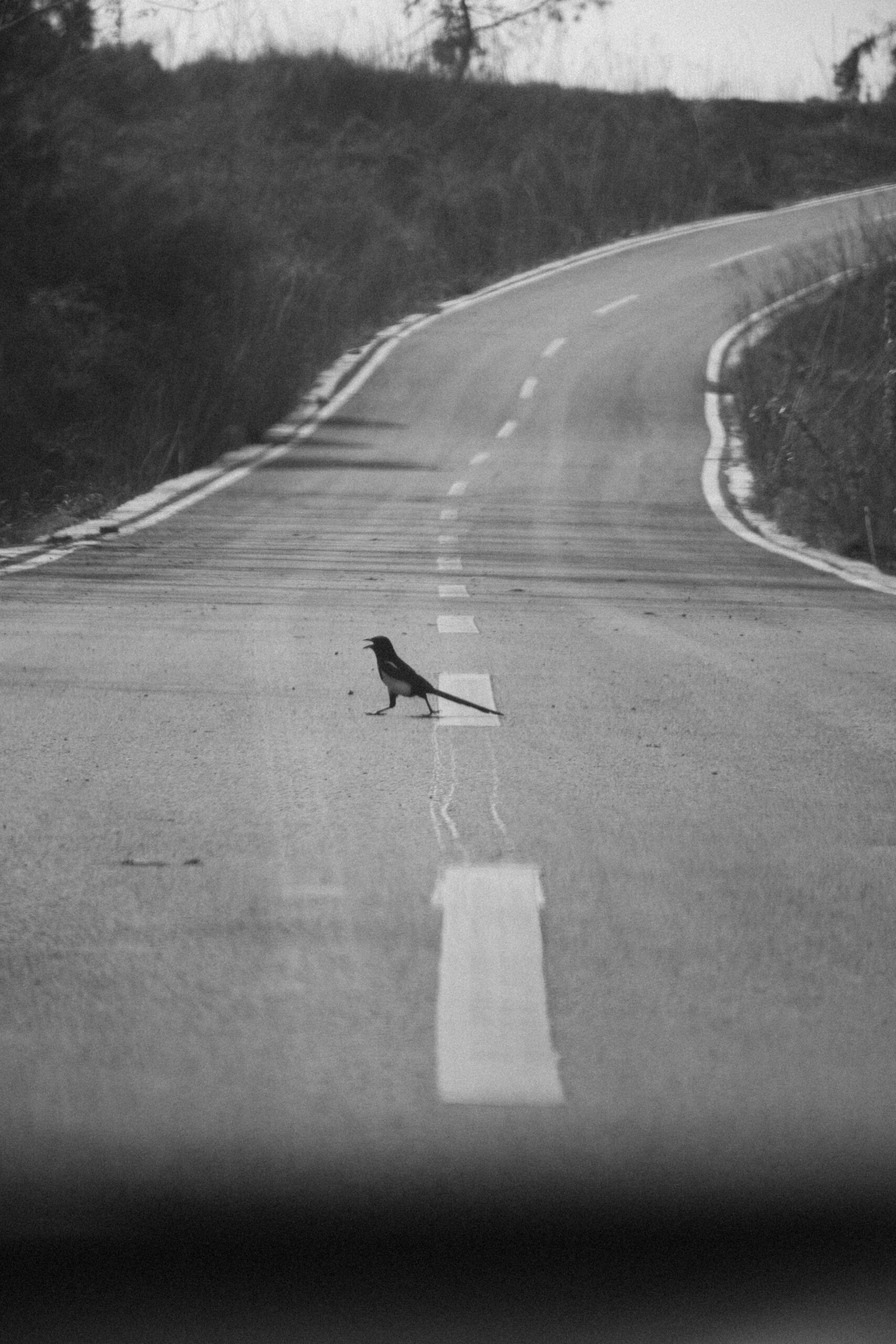
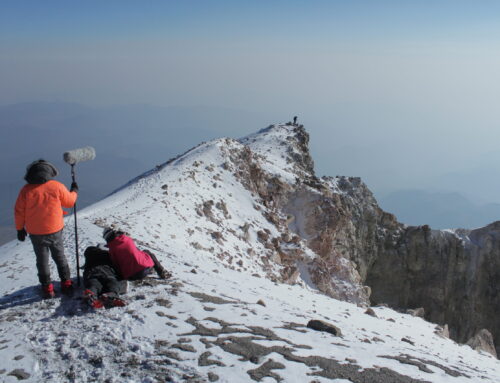
The Bird. Photo by Upsplash
Oté okpé, ikojóke ona bak ta kandaré
nhi kinnan aki n’unkudé
ka nhi na tando kanhinan a ki n’unkudé?
Oté to kobentén, modon
ka menelam
nhóka n’unummi konó
My father died, pain took over me,
I lost control and I turned into a bird
Where can I go now that I walk like a bird?
Father of an orphan, return,
and take me with you,
so that I may rest this burning heart
How does one write about the death of one’s own father? The only words I could put to paper were the poetic ones I had learned to bear grief, echoing the many deaths that marked the years I spent on the island of Bubaque, in the Bijagó Archipelago of Guinea-Bissau. Like the birds whose cries awaken every creature of the great forest at sunrise, I learned to sing like a bird, to cry like a bird, to walk like a bird, to be like a bird—expressions that, among the Bijagós, capture the devastating weight of losing a loved one. Once I had become a bird, I began to compose songs for my father’s death—songs woven from the imagery and poetic rhythms I had learned while walking beside others in their grief on that island.
Death, as it truly is
I once believed that the absence of God was a liberation. But on the night my father died, I felt instead the void left by divine mercy, without the solace of faith or the structured choreography of mourning that offers order to grief. Without faith, there are no softened paths—only cold corridors, endless staircases, and the sterile, antiseptic rituals of the hospital, a cathedral of the faithless. That night, the hospital was an empty realm of shadows, where only laments and sighs marked the passage of time. The sharp scent of bleach masked decay, sealed doors guarded against the terrible. Over the phone, the nurse wrapped her words in caution, urging me to wait, to let them prepare my father’s body. Her voice remains carved into my flesh like a scar: “Dear, you won’t want to see death as it truly is.”
But what does death look like?
Hidden beneath a sheet, confined to a room as desolate as a wasteland, disinfected and sterilized so it may be observed from a safe distance. Immobilized, imprisoned in sealed containers—the stretcher, the locked coffin, the car with darkened windows, the windowless funeral parlor, the grave, the furnace, the cemetery, the marble headstone that seals becoming within a horizon locked between two dates. Bodies arranged in the illusion of peaceful sleep, hair neatly combed, skin perfumed, dressed in the finest clothes and best shoes.
Driven by the innocence of someone who had always been shielded from the reality of death, I refused to wait for the time of concealment. I rushed to my father’s side, as if I could still grasp a breath of life before it slipped away forever. And then, what the nurse had warned over the phone struck me with the brutal force of an unexpected storm. The illness itself—that insatiable beast that devoured my father slowly, one bite at a time, until it consumed him entirely—had already become, for me, the face of death. But nothing had prepared me to confront the raw ugliness of death as it truly is.
From the moment I lost control
“Pain,” said Koká, an elder from the village of Bijante (Ilha de Bubaque, Bijagós Archipelago, Guinea-Bissau), where I lived for four years, a place that, only a few years before my father’s death, taught me how to face mortality, “can shake a man as the wind (netí) bends the trees, as the storm (kakpikpidí) tosses the pirogues. He who does not know how to face the waves will drown, and he who fails to control a fire will set the land ablaze (ogoutí). Thus, my friend, one who cannot contain their pain (n’oboj, to control a fire) will break their own heart (n’okojóke an konó). He who loses control of his form (n’okandaré, literally ‘to lose one’s shape’) will, in the end, lose himself entirely (n’opetok).”

Koká and the author, Bubaque Island. Photo by Lorenzo Bordonaro.
The ethics of emotional control (n’ojiron), calmness (n’oseney), discipline (n’oseney), and patience (n’ogbe bu) run deep within Bijagó society. But above all, it is grief (ikojóke)—the sorrow of mourning—that must be contained, sculpted into forms that are aesthetically and socially sanctioned, shaped by an imaginary rooted in the sea and its navigation, as well as in the forest and its creatures, the double horizon of an island people.
For one who suffers in their heart over the loss of a loved one (okojóke an konó), grief untamed can drain vital energy (ikojóke itin’an), lead to grave illness (n’ogó egod ta kugbí eti ikojóke), drive one to madness (n’orokóm eti ikojóke), burn within like an unextinguished fire (n’ogont ta konó eti ikojóke), or even cause death itself (n’okpé eti ikojóke).
Unchecked sorrow spreads like an affliction, seeping into the entire family, disturbing the delicate peace of the departed’s spirit. Trapped within tears, as if bound by invisible chains, the dead cannot move on. The weight of grief clings (n’otokán), grips tight (n’otronnán), pressing upon the mourner’s back, an unseen burden that refuses to let go. In the years I lived in the Bijagós, I learned that death is dangerous and must be faced in the embrace of the community that holds both the living and the dead. There are formulas, rituals, and strategies to contain grief, to keep it from overflowing and consuming us.
But that night, in that hospital, there was no one. No one to hold me, no one to build barriers against the flood of tears. There was no one to steady my steps and keep me from walking like a disoriented bird—an image I shaped from the Bijagó poetic imagination, where birds embody the daze of grief. In front of my father’s lifeless body, I searched my memory for the choreographies I had learned in Bijante—the ritualized gestures, the carefully structured practices and prescriptions designed to tame grief, to keep death from shattering the boundaries of what can be endured.
Alone and unprotected, I felt sorrow clinging to my skin, seeping into me. Without the songs, my voice drowned in a hoarse lament. I left the room, directionless, out of control, carried away by the violence of ikojókei, the pain of mourning, as if my body had lost its wings.
From the moment I became a bird
Takandaré
nhikanam aki nunkude
anhinani tando ka
nhikanam aki nunkude
I lost control,
That is why I am like a bird.
I cannot walk because—
That is why I am like a bird
To be like a bird, to walk like a bird, to cry like a bird—among the Bijagós, these expressions capture the devastating impact of losing a loved one. Grief uproots the ground beneath one’s feet, disfigures the body, and disorients the soul.
Omgbá-okanto odag aki epanha
Omgbá-okanto odag eti ikojóke okibida nunkude
Nhikandaré eti ikojóke, nhikanam aki nunkude
Nhido aki nunkude
Nhankimona tandag aki epanha enhenguená
The child-woman cries like a crow
The child-woman cries in pain and becomes a bird
I lost control to grief, and I am now like a bird
I walk like a bird
I cannot stop crying like a crow for my misery
The death of a parent turns you into a child, no matter your age. In mourning my father, I came to understand what it means to be both a child and a woman (omgbá-okanto, child-woman). The adult I am could grasp the finality of death, while the child within me was torn apart by fear, anger and pain. To be like a bird is to lose oneself in the vertigo of grief, to carry fragile wings with no direction, to let absence take us where no path remains.
I remember my surprise as I left the hospital and realized that I truly could not keep my balance. My steps were unsteady, hesitant, precarious—like those of birds, creatures of the sky who see the world from afar, without the grounded certainty of those who belong to the earth. It took me an eternity to cross the few meters that separated me from the car, floating, barely tethered to the ground, as if I were out of my element, wavering and uncertain, like someone taking their very first steps.
My voice would not obey me. Words were impossible. Only a frail lament escaped—a sound suspended between crying and singing. Between n’orai (to sing) and n’odag (to weep), the melody of birdsong carries the weight of sorrow. For a moment, I wondered, bewildered, if I was truly becoming a bird, just as Koká had told me: “true pain transforms us into birds.”
The next morning, my legs and back ached. My muscles, locked in painful contraction, refused to move. Tendons, nerves, and ligaments were inflamed and carved a searing pain into my flesh. My body was hard as wood.
Koká—whose name literally means “poor thing”—had already spoken to me about this: “uncontrolled suffering clings to the body, crystallizes in the legs (anmbe), and then buries memory (n’éta) deep within the stomach (ankapó). Pain wearies the body (ikojóke itin’an kugbí), it beats you down and presses you to the ground (n’okpeteká). The pain in the legs (ikojóke anmbe) are your body remembering (kugbí éta), a weight that would not let you forget (n’otanín). True pain transforms you into a sparrow, and your body, afflicted by an unending sorrow, will turn to wood, until you become a pirogue [a long narrow canoe].” A typical Bijagó metaphor compares the body (kugbí) to a pirogue in which the vital energy (orebok) resides. In times of overwhelming pain, it is said that the vital energy disembarks (onák—from the verb n’onáka, to disembark, to step ashore).
I was lost, a bird unable to fly, my steps faltering, my path leading into an uncertain future. I felt my body heavy, hard as wood, every movement a struggle. I had become a bird to weep for my father, and a pirogue to carry his soul, for a little while longer, across the sea to the land of the dead—kokpekentó, the place beneath the waters.
From the moment I became a pirogue
Oté to kobentén moném konó tan enho
Oté to kobentén modon, ka menelam, nhóka n’unummi konó
Otéssenh, memeguén nabanenh?
N’unummi konó n’obeney n’annó
Enhenguená kan enho, enhenguená deeki Nhinam omgbá-okanto, n’keném nhikojóke
Kakpikpidí kakpús negén
Ogoutí otók n’ajóko
N’unummi konó n’usamák kutína
N’unummi konó n’unasamák
Oté to kobentén modon
Father of an orphan, have mercy on me
Father of an orphan, return, and take me with you, so that I may rest from this misery
My dear father, do you not hear my words?
My burning heart drives me to madness
Wretched me, wretched me, left alone
I am a child-woman, I do not deserve such suffering
The storm has destroyed the village
The fire has burned down the houses
My burning heart has waged war and won
My burning heart has broken me
Father of an orphan, return!
Pinned to the ground by the sheer weight of pain, I finally broke down in tears. Unrestrained, unbridled. Overcome by the fury of mourning, I called out to my father—I begged him to help me, as he always had, to not abandon me, because I was not yet ready to stop being his little girl. To return, because in my orphanhood, I was still a child, and I needed him to hold me.
And that was how I chained his spirit.
I could not stop crying. I became a heart in flames, and my father’s spirit embarked within me as if I were a pirogue. “When tears flood the heart, they imprison the deceased,” Koká would say. “The woman’s body carries the spirit in her womb, so that the dead may cross the sea of life, incarnating in the one who once loved them.” Unable to leave, my father nestled himself within my body, clinging to life. I had invoked him, and he returned—embedding himself in the agony of my body, blocking my steps, stealing my voice, leaving me dead among the living, floating between earth and sky.
When I reached the limits of my strength—a pirogue sinking into the sea of its own tears—with the last breath of my voice, I began to weep-sing, pleading for him to step away, to let me go, so that I could go on living.
Orebok, moiam ta kan enho
Orebok, onetommó ta enho
Orebok, otom ta enho
Oséngue otommó n’unte
Orebok ona obak
Oténh mankodhó n’onakám kan enho
Oténh, modón n’obon anarebok
Oténh, obon anarebok
Orebok to oténh oboki n’unté ankugbi
Deceased, depart from me
Deceased, you are stronger than I
Deceased, you are more powerful than I
Dangerous spirit, you weigh down my boat
The deceased clings to me
My father, do not enter me again
My father, you may go
My father, rest in the place of the dead
Spirit of my father, leave the boat of my body
To my father, Giuseppe Pussetti
(in memoriam)
Chiara Pussetti (PhD in Cultural Anthropology, 2003) Chiara Pussetti (PhD in Cultural Anthropology, 2003) is Principal Researcher at the Institute of Social Sciences of the University of Lisbon, under the FCT contract reference 2023.14666.TENURE.003/CP00017/CT00003. She is also Professor in the DANT.UL doctoral programme of the same university and President of the EBANO Artistic Collective (ebanocollective.org). She has published widely on the anthropology of the body and emotions, medical anthropology, and gender and migration studies. Her current research develops a critical exploration of aesthetics, inequality and the politics of embodiment in contemporary societies. In the past five years, she has authored Be Fu**ing Perfect. The Search for Perfection from Diet to Plastic Surgery (Etnográfica Press 2024) and coedited four volumes: Exercícios de Antropologia Narrativa (Colibrí 2023), Remaking the Human (Berghahn 2021), Biotecnologias, transformações corporais e subjetivas (UFRGS 2021), and Super-humanos (Colibrí 2021).
Cite as: Pussetti, Chiara. 2025. “The Bird’s Lament.” In “Anthropology that Breaks Your Heart: Loss and Found,” edited by Salwa Tareen, Magdalena Zegarra Chiappori, and Hosanna Fukuzawa, American Ethnologist website, 24 November. [https://americanethnologist.org/online-content/the-birds-lament-by-chiara-pussetti/]
This piece was edited by American Ethnological Society Digital Content Editor Kathryn E. Goldfarb ([email protected]).